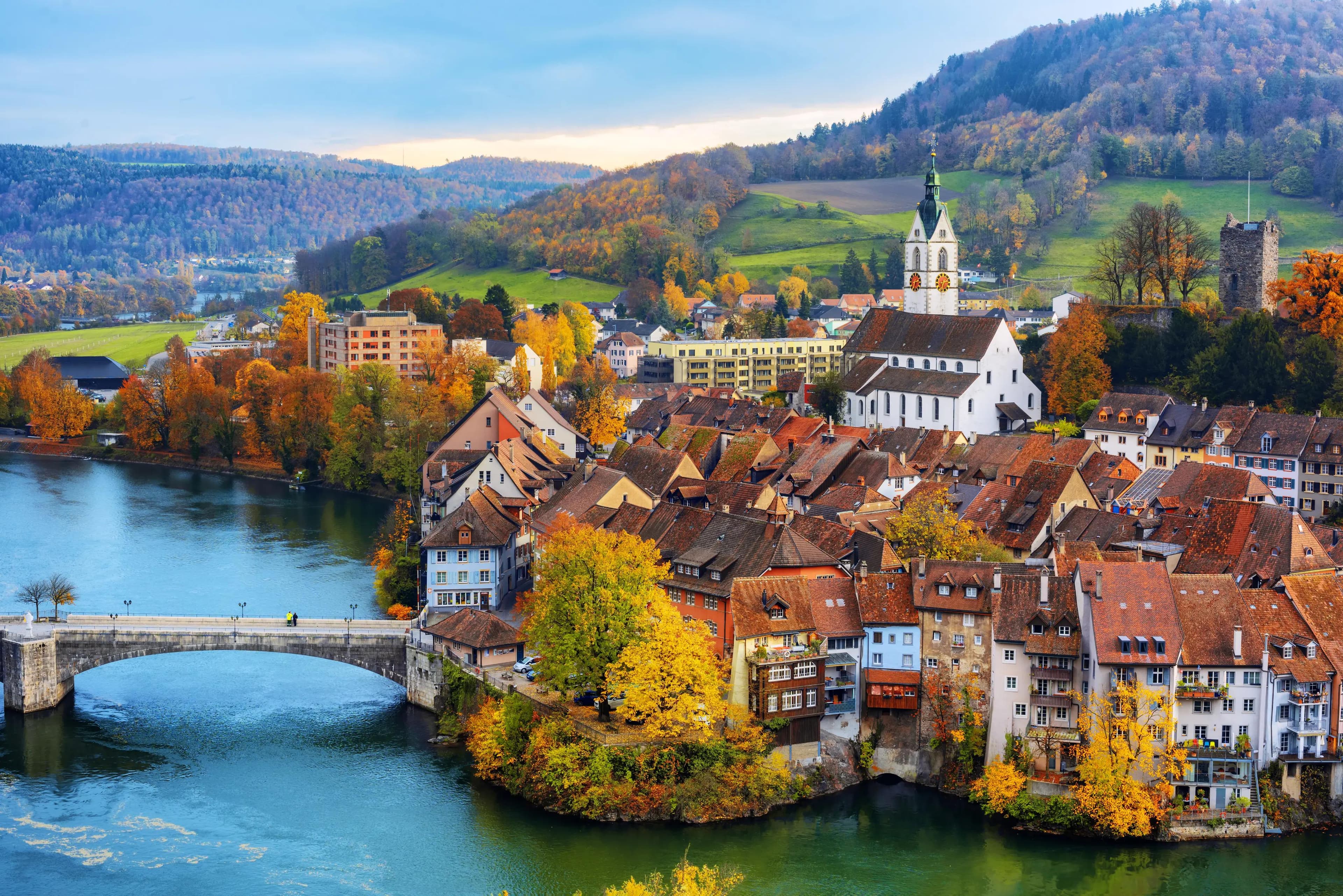
Why Moving to Switzerland Might Be the Right Choice
Switzerland has long been one of the most sought-after relocation destinations in the world. With a reputation for political neutrality, breathtaking Alpine scenery, and one of the highest standards of living on the planet, it is easy to see why so many professionals and families ask themselves: should I move to Switzerland?
Interest from expatriates has remained strong heading into 2026. According to the Federal Statistical Office (FSO), Switzerland's permanent resident population surpassed 9.1 million at the end of 2025, with foreign nationals making up roughly 26% of that total. In Geneva specifically, the numbers are even more striking: data from the canton's statistics office (OCSTAT) show that over 220,000 foreign residents lived in Geneva at the end of 2024, representing more than 41% of the canton's 639,000 residents That makes Geneva one of the most internationally diverse cities in all of Europe.
Whether you are drawn by career prospects, family ties, or simply the Swiss way of life, this guide covers every key factor you need to weigh before making the move. And if you want a practical checklist to go alongside this, our guide on top things to know before moving to Switzerland is a great companion read.
What Makes Switzerland a Great Place to Live?
Switzerland consistently ranks among the world's top five countries for quality of life. In Numbeo's 2026 Quality of Life Index, Switzerland secured 5th place, excelling in key areas such as safety, healthcare, purchasing power, and environmental quality. These high rankings reflect the everyday experience of living in Switzerland, making it a standout choice for expats and families seeking a long-term move.
With some of the lowest crime rates in Europe, reliable public transport, and a pristine environment, Switzerland offers a lifestyle that's hard to match. From the tranquil shores of Lake Geneva to the majestic peaks of the Bernese Oberland, the country seamlessly blends urban convenience with breathtaking natural beauty. Though bureaucracy can be complex at times, the overall efficiency and cleanliness of public services make it a smooth experience.
Top Benefits of Moving to Switzerland
Here’s a closer look at the standout advantages that make Switzerland a top destination for expats in 2026:
Excellent Healthcare System: Switzerland offers mandatory, universal healthcare that is consistently ranked among the best in the world. Residents can choose their own insurer and benefit from both public hospitals and private clinics. Monthly premiums range from CHF 400 to CHF 650, depending on the canton and plan.
World-Class Public Infrastructure: Whether it’s the renowned SBB rail network or efficient local transport, Switzerland’s public infrastructure sets a global standard. Roads are well-maintained, digital services are reliable, and public spaces are impeccably clean.
High Earning Potential and Job Security: With median monthly salaries ranging from CHF 5,500 to CHF 9,000, Switzerland offers excellent earning potential, especially in finance, technology, and life sciences. With unemployment at just 2.9% in 2026, job security remains strong, making it one of the most attractive places for professionals.
Is Switzerland an Ideal Place for Families and Expats?
Switzerland provides an ideal environment for families. Public education is free and compulsory from age four to 15, with instruction in the local cantonal language. In Geneva and Vaud, this means French; in Zurich and Bern, it’s Swiss German. Schools are well-equipped, and children are supported throughout their education, making it an excellent choice for young families.
For expat families, international schools are plentiful, particularly in cities like Geneva and Zurich. Tuition for these schools, offering IB, British, or American curricula, ranges from CHF 20,000 to CHF 40,000 per year. While the cost of international education can add up, it’s a worthwhile investment for families with plans to relocate again.
Switzerland’s family-friendly policies, including generous parental leave and strong childcare infrastructure, are further complemented by the country’s high safety standards. However, the cost of living, including childcare and schooling, is something to consider. Despite this, for families with competitive salaries, Switzerland's overall quality of life is exceptional and hard to beat.
Living Costs of Switzerland
There is no sugarcoating it: Switzerland is expensive. The cost of living is dramatically higher than in the United States and significantly above the European average. But the picture is more nuanced than the headline figure suggests, because Swiss salaries are also among the highest in the world.
Here is what a single person can expect to spend monthly in 2026 (excluding rent):
Expenses
Average prices per month
Groceries
CHF 400 – CHF 600
Health insurance
CHF 350 – CHF 650
Utilities
CHF 150 – CHF 250
Public transport
CHF 70 – CHF 100
Dining out and leisure
CHF 300 – CHF 500
Groceries
Average prices per monthCHF 400 – CHF 600
Health insurance
Average prices per month CHF 350 – CHF 650
Utilities
Average prices per monthCHF 150 – CHF 250
Public transport
Average prices per monthCHF 70 – CHF 100
Dining out and leisure
Average prices per monthCHF 300 – CHF 500
Average living expenses of some Swiss cities
Add rent, and a single person in a major city typically needs CHF 3,500 to CHF 5,000 per month. A family of four should budget CHF 7,000 to CHF 9,000 or more. Compared to other European countries like Germany, France, or the Netherlands, these figures are substantially higher. But when you factor in Swiss salary levels, the purchasing power gap narrows considerably.
Practical tip
Many residents near the French border shop in Annemasse or Saint-Julien-en-Genevois to cut grocery costs significantly. Discount supermarkets like Lidl, Aldi, and Denner also help stretch the budget.
What Are the Most Expensive Cities in Switzerland?
Zurich and Geneva consistently rank among the most expensive cities in the world. Both cities command premium rents, with a one-bedroom apartment in the city center typically costing CHF 2,000 to CHF 3,500 per month. You can find detailed breakdowns in our guides on the cost of living in Zurich and the cost of living in Geneva.
Basel is slightly more affordable than Zurich or Geneva, while cities like Bern and Lausanne sit in the middle range. Smaller towns and rural cantons offer noticeably lower rents and living costs, though job opportunities in specialized fields may be more limited. If you are flexible on location, living outside the major urban centers and commuting in can make a real difference to your monthly budget.
Job Opportunities in Switzerland: Is It Easy to Find Work?
The key industries driving demand for international talent in 2026 are:
Finance and banking: Zurich and Geneva are global financial hubs. ESG analysts, compliance officers, and wealth managers are in particularly high demand, with median annual salaries ranging from CHF 140,000 to CHF 200,000+.
Technology and AI: Cloud architects, cybersecurity specialists, and AI engineers are among the most sought-after profiles. Zurich hosts Google's largest European engineering hub, and the tech ecosystem is growing fast.
Healthcare: Switzerland is actively recruiting nurses, surgeons, and support staff to address an aging population. Registered nurses earn CHF 85,000+ annually, while specialized surgeons can earn CHF 250,000 or more.
Life sciences and pharma: Basel is home to Roche and Novartis, and the broader life sciences sector employs tens of thousands of international professionals. Biotechnologists and clinical researchers earn CHF 120,000 to CHF 160,000 per year.
Education and international organizations: Geneva hosts the UN, WHO, CERN, and dozens of other international bodies, creating a steady demand for multilingual professionals across policy, research, and administration.
How to Find Work in Switzerland as an Expat
Finding a job in Switzerland as a foreigner is very achievable, but it requires the right approach. Here are the most effective strategies:
1. Use the right job portals
Jobs.ch and Indeed.ch are the two largest platforms. LinkedIn is essential for professional networking and is heavily used by Swiss recruiters.
2. Network actively
A significant share of Swiss jobs are filled through referrals. Attend industry events, join professional associations, and connect with people already working in your target sector.
3. Work with recruitment agencies
Specialist agencies in finance, tech, and healthcare can open doors that are not publicly advertised.
4. Meet language requirements
Around 70% of advertised roles require proficiency in at least one Swiss official language. French is essential in Geneva and Lausanne; German dominates in Zurich, Bern, and Basel.
5. Optimize your CV for Applicant Tracking Systems
Swiss recruiters increasingly use Applicant Tracking Systems. Make sure your CV includes industry-specific keywords and highlights soft skills like adaptability and cross-cultural communication.
What Are the Immigration and Visa Requirements for Switzerland?
Switzerland is not a member of the European Union, but it has bilateral agreements with the EU that give EU and EFTA nationals the right to live and work here freely. For everyone else, the process is more structured.
Here is a quick overview of the main permit types:
Permit L (short-term): Valid for up to 12 months, tied to a specific employer. Suitable for short contracts or project-based work.
Permit B (annual residence): The most common permit for new expats. Renewable annually and linked to employment or self-sufficiency.
Permit C (permanent residence): Available after five years of lawful residence for EU/EFTA nationals, or 10 years for non-EU nationals. See our full guide on how to get Switzerland's permanent residence.
Permit G (cross-border commuter): For those living in a neighboring country (France, Germany, Italy, Austria) but working in Switzerland.
For non-EU nationals, Switzerland issues a limited annual quota of around 8,500 work permits. Employers must demonstrate that no suitable Swiss or EU candidate was available before sponsoring a non-EU hire. This makes securing a job offer before applying essential.
Family reunification is possible for those already holding a valid Swiss residence permit. Spouses, registered partners, and children under 21 can generally apply to join a permit holder, subject to proof of adequate housing and financial means.
The Swiss permit application process can vary, depending on the applicants' country of origin.
Tips for Navigating the Swiss Immigration Process
The Swiss immigration process is well-organized but requires careful preparation. Here is how to make it as smooth as possible:
Tip 1: Apply early
Permit processing in Geneva through the OCPM typically takes four to eight weeks. Start the process as soon as you have a confirmed job offer and accommodation.
Tip 2: Prepare your documents in advance
You will need your passport, employment contract, signed lease agreement, passport photos, and proof of health insurance enrollment.
Tip 3: Register with your commune
After arriving, you must register with your local municipality within 14 days. This registration is required to open a bank account, enroll children in school, and access most public services.
Tip 4: Enroll in health insurance within 90 days
Missing this deadline can result in being automatically assigned to an insurer, often at a higher premium.
Tip 5: Check the SEM website regularly
The Swiss State Secretariat for Migration (SEM) publishes the most current permit quotas, requirements, and processing timelines.
How to Adapt to New Life in Switzerland
Switzerland is a welcoming country, but it has its own distinct social norms and rhythms. Understanding Swiss culture and traditions before you arrive will save you a lot of awkward moments and help you build genuine connections faster.
Here are the most practical tips for settling into Swiss life:
Respecting punctuality: The Swiss take being on time very seriously, whether for a work meeting, a dinner invitation, or a doctor's appointment. Arriving late is considered disrespectful.
Learning the local language: Even basic French in Geneva or German in Zurich goes a long way. It signals respect for the local culture and opens doors socially and professionally. Switzerland has four official languages: German, French, Italian, and Romansh.
Embracing the work-life balance: Swiss employers increasingly prioritize employee well-being. Hybrid work models are common, and most employees receive four to five weeks of paid vacation. Weekends are genuinely protected time.
Following noise and recycling rules: Sundays are quiet days in Switzerland. Avoid loud activities, laundry, or DIY work. Recycling is taken seriously, and waste sorting is expected in every household.
Joining a local club or association: Switzerland has a strong tradition of Vereine (clubs) covering everything from hiking and cycling to music and volunteering. This is one of the best ways to meet Swiss people and build a genuine social network.
Being patient with social connections: Swiss friendships develop slowly but tend to be deep and lasting. Do not mistake reserve for unfriendliness. Once trust is established, Swiss people are warm, loyal, and genuinely supportive.
Connecting with expat communities: Networks like InterNations and Meetup.com have active groups in Geneva, Zurich, and Basel. These are great starting points while you build your local network.
What Are the Challenges of Living in Switzerland?
Switzerland is not without its difficulties. Being honest about the challenges is just as important as celebrating the benefits. Here are the main ones expats encounter:
1. High cost of living, especially in major cities
Zurich and Geneva are consistently ranked among the most expensive cities in the world. Housing in particular can be a shock, with vacancy rates in Geneva hovering around 0.5%. Competition for apartments is fierce, and landlords typically require proof of income equal to three times the monthly rent.
2. Language barriers in some regions
While English is widely spoken in international business environments, daily life in smaller towns and rural cantons often requires the local language. Administrative documents, lease agreements, and local services are rarely available in English outside major cities.
3. The complexity of the healthcare and tax systems
Switzerland's healthcare system is excellent but requires active management. You must choose your own insurer, select a deductible level, and understand co-payment rules. The tax system is similarly layered, with federal, cantonal, and municipal taxes all applying separately. Rates vary significantly by canton.
4. Social integration
Swiss society can feel reserved, particularly outside of international hubs. Building a genuine social circle takes patience and consistent effort, especially if you do not speak the local language.
How to Overcome Challenges When Living in Switzerland
Most of the challenges above are manageable with the right preparation and mindset. Here is how to tackle them:
Budget carefully before you arrive. Research average rents in your target city, factor in health insurance, and build a realistic monthly budget before accepting a job offer. Knowing your numbers upfront prevents unpleasant surprises.
Invest in language learning early. Even a basic level of French or German will transform your daily experience. Many cantons offer subsidized language courses for new residents.
Get professional help with taxes and insurance. A local fiduciary or tax advisor, such as Fiduciare Genevoise - reliable fiduciary services in Geneva, can save you money and stress. The Swiss tax system rewards those who understand it, with deductions available for commuting, childcare, pension contributions, and more.
Work with a relocation agency. A specialist agency handles housing searches, permit paperwork, school placements, and settling-in services. Understanding how relocation companies work can help you decide whether this kind of support is right for your move.
Planning to Move to Switzerland?
We handle everything from housing and permits to school placements and settling-in support in Geneva. Therefore, you can focus on what matters most.
Conclusion
Switzerland offers a genuinely exceptional quality of life. The healthcare is world-class, the job market is stable and well-paying, the infrastructure is excellent, and the natural environment is hard to beat. For professionals in finance, tech, healthcare, or life sciences, it is one of the best places in the world to build a career.
At the same time, the high cost of living, the complexity of the immigration and tax systems, and the time it takes to integrate socially are real factors that deserve honest consideration. Switzerland rewards those who prepare well and approach the move with realistic expectations.
The key question is not whether Switzerland is a good place to live. It clearly is. The question is whether it aligns with your personal goals, your career trajectory, your family situation, and your financial reality. Weigh those factors carefully, do your research, and if the answer is yes, Switzerland will likely exceed your expectations.
Start your relocation journey with Relocation Genevoise and get expert advice on moving to Switzerland from our Geneva-based team. Our local experts will support you in adapting to life in Geneva, offering valuable insights into both the city and the wider Swiss culture.