Moving to Switzerland means embracing a life beyond just scenic mountains and clean streets. While the country is celebrated globally for its efficiency, beneath that surface lies a rich, structured way of life. To truly settle in, you need a roadmap to the local Swiss culture and traditions.
This guide provides a straightforward look at the customs that define daily life here. Understanding these norms will smooth your path from newcomer to integrated resident. It's about knowing when to be quiet, how to greet people, and why a cowbell matters.
What Makes Swiss Culture Unique?
Switzerland’s cultural identity is shaped by a unique blend of geography, history, and language. The rugged Alpine terrain naturally fostered strong regional autonomy among the original cantons. This history resulted in a country that is unified, yet fiercely localized in its Swiss culture and traditions.
The nation’s identity is continually negotiated between its four linguistic groups. This constant balancing act creates a society highly attuned to respect and consensus. It explains why newcomers find Switzerland both highly structured and genuinely warm once you break the ice.
The emphasis on democracy and self-reliance is deeply rooted in the political structure. This sense of personal responsibility translates into high standards for public conduct.
Key Swiss Traditions You Should Know
If you’re moving to Switzerland, knowing local customs will make life easier. Here are the key Swiss traditions you’ll see year-round, so you can join in and feel at home.
Swiss holidays and celebrations
Swiss celebrations vary by region, but all of them highlight community pride, long-standing history, and the country’s love for tradition. Understanding these holidays helps newcomers connect with their local neighborhood and appreciate everyday Swiss life.
National Day (1st August)
Switzerland’s National Day marks the founding of the Confederacy in 1291. Families gather outdoors, enjoy fireworks, and take part in lantern parades. It’s a warm, communal celebration of unity and independence.
Sechseläuten (Zurich)
A major spring festival is held in Zurich every April. The highlight is the burning of the Böögg—a giant snowman symbolizing winter. Locals believe that the faster the Böögg’s head explodes, the better the summer will be.
Fête de l’escalade (Geneva)
Celebrated every December, this event honors Geneva’s defense against an attack in 1602. Children dress in costumes, parades fill the streets, and families smash chocolate cauldrons. It’s one of the most cherished traditions in French-speaking Switzerland.
Federal fast day (Jeûne Fédéral)
Observed on the third Sunday of September, this holiday dates back to times of hardship. It’s a quiet day of reflection, often enjoyed with the famous tarte à la crème.
Tips: Newcomers can join Swiss traditions easily by starting small. Attend local parades, concerts, or fireworks, join neighbourhood apéros, and support local markets. Observe first, participate respectfully, and locals will appreciate your effort.
Understanding your new city is just as important as finding the right property. Through our guided introduction to Geneva and its everyday culture, we walk you through local habits, essential services, and the character of each district—so you can settle in with confidence.
Famous Swiss cultural icons
Heidi and Swiss folklore play a central role in shaping the country’s cultural identity. The story reflects Switzerland’s deep connection to nature, alpine landscapes, and simple, grounded living—values that still influence daily life today.
Yodeling is another well-known tradition. Far from a stereotype, it’s a skilled vocal technique rooted in the Alps and still performed by regional music groups and at cultural festivals.
The alphorn adds yet another layer to Swiss heritage. Once used to communicate across mountain valleys, it’s now a celebrated symbol of national tradition, often heard at mountain festivals and community events.
The alphorn
Swiss Food Traditions
Cheese culture
Cheese is at the heart of Swiss culture, especially in winter.
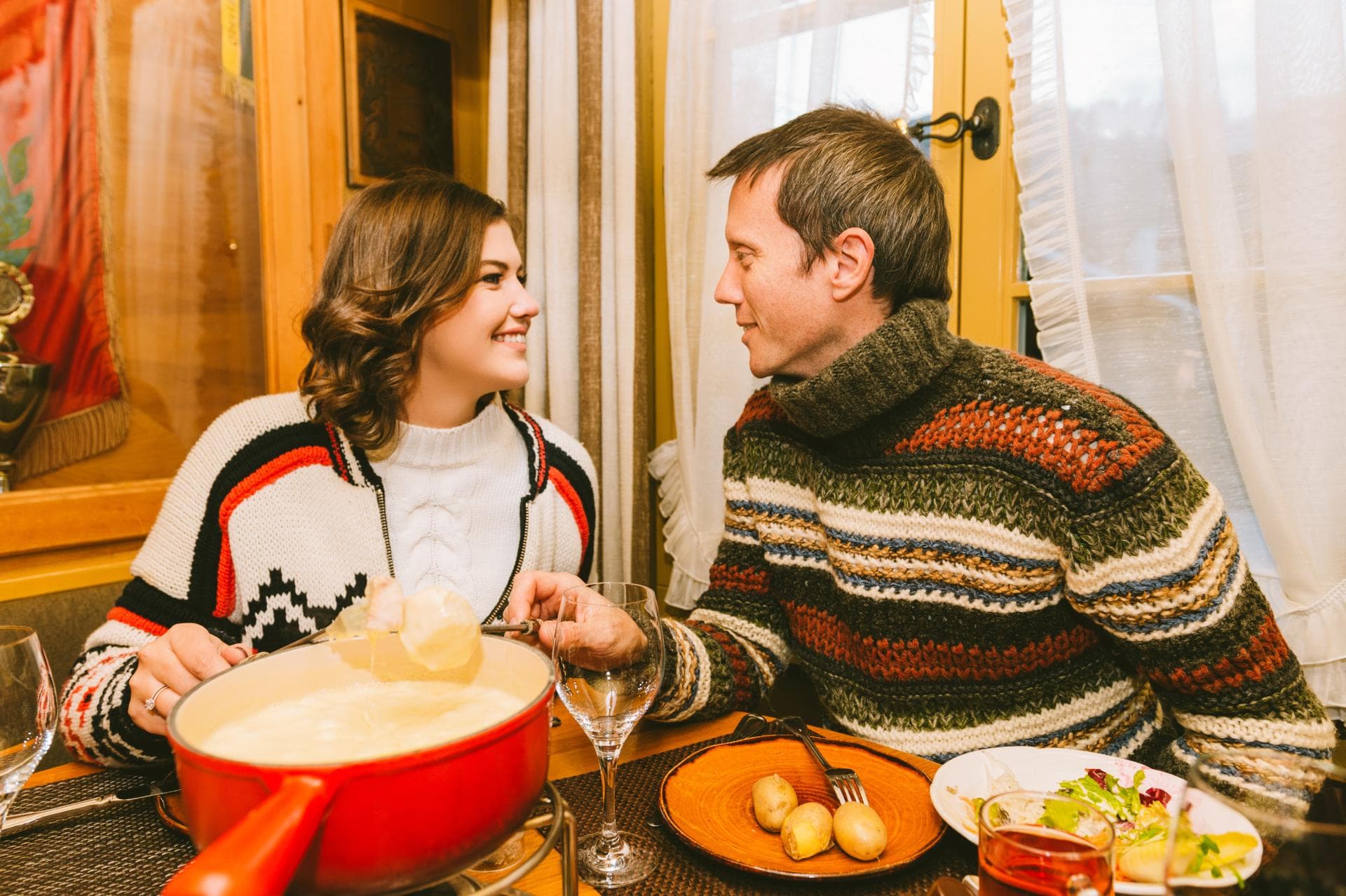
Fondue: A communal pot of melted cheese shared with bread—simple and social.
Raclette: Melted cheese scraped over potatoes, pickles, and onions. Both are slow, cozy meals designed for conversation and connection.
Muesli and breakfast habits
Invented by a Swiss doctor, muesli is a staple of the Swiss breakfast table. Morning meals are usually simple—fresh bread, local cheese, jam, and high-quality ingredients.
Chocolate heritage
Switzerland is world-famous for its smooth, creamy chocolate. From artisan chocolatiers to historic factories, chocolate is a proud part of Swiss identity.
Regional specialties
Swiss cuisine changes across linguistic regions:
German-speaking areas: Rösti, sausages, and hearty comfort dishes.
Romandy (French-speaking): Papeete Vaudois, cheese dishes, and rich sauces.
Ticino: Italian-influenced cuisine like polenta, risotto, and chestnuts.
Romansh region: Rustic mountain dishes with dried meats and alpine ingredients.
Swiss Etiquette and Social Norms
Swiss social norms are clear, respectful, and highly valued, helping maintain harmony in both public and private life. Here are some social norms and etiquette newcomers should be aware of:
Greeting etiquette
A firm handshake with direct eye contact is the standard greeting. Formal titles—Mr., Ms., Dr.—are used until someone invites you to switch to first names. In French-speaking regions, friends often greet each other with three cheek kisses. Personal space matters, so gestures should stay polite and measured.
Quiet hours
Quiet hours are taken seriously. Noise should be kept low from 10 PM to 7 AM and during lunch (12 PM to 1:30 PM). Sundays are especially protected, with activities like drilling or vacuuming discouraged. Most buildings have clear rules, and neighbors expect them to be respected.
Recycling rules
Switzerland’s recycling system is strict and highly organized. Glass is separated by color, and paper, PET plastics, metal, and general waste all have specific bins. Many cantons require official pre-paid garbage bags (Sacs Taxés), and incorrect disposal can lead to fines. Proper recycling is viewed as a civic responsibility.
Inviting people into your home
Home invitations carry meaning in Switzerland. Arrive on time, and bring a small gift such as wine, flowers, or quality chocolate. Good manners, thoughtful conversation, and interest in local culture go a long way toward building genuine relationships.
Local tip: If you host, offer slippers or ask guests to remove shoes. It’s not mandatory, but many households prefer it, and guests won’t find it strange.
Service is included in restaurant prices, so tipping isn’t mandatory. Still, rounding up the bill or adding 5–10% is appreciated for good service. It’s a small gesture that shows awareness and respect for local customs.
Follow these small habits and you’ll feel the difference right away. Swiss people may seem reserved at first, but once they notice your respect for local customs, they open up warmly and steadily.
How Swiss Culture Varies by Region
Understanding regional differences is essential for anyone relocating to Switzerland. Each area has its own language, customs, and lifestyle. Adapting to these nuances makes integration smoother and more enjoyable.
Culture in Geneva and Vaud (Romandy)
Romandy, the French-speaking region, reflects strong French cultural influence. Life here is often slower and more relaxed than in the German-speaking areas.
Social interactions tend to be polite and formal. Friendships may take longer to develop but are usually deep and lasting.
Geneva hosts major events like the Fête de l’Escalade, celebrating local history. The cultural scene is vibrant and international. Services like Relocation Genevoise can help newcomers explore and connect with the city.
Culture in Zurich, Bern, Basel (German-speaking Switzerland)
In contrast, the German-speaking regions are known for their structure, efficiency, and punctuality. Work hierarchies are respected, and communication is often direct and solution-focused.
While Swiss-German dialects are common in everyday life, High German is used in official settings. People value clarity and precision, which can feel more formal but ensures smooth interactions.
Traditional events like Zurich’s Sechseläuten or Basel’s Fasnacht highlight deep historical roots and strong community spirit. Participating in these festivals helps newcomers connect with local culture and feel integrated.
Ticino’s Mediterranean lifestyle
Ticino, located south of the Alps, offers a distinct contrast with its Mediterranean warmth and relaxed approach to daily life. Social interactions are more expressive, and people often take time to enjoy conversation and connection.
Family gatherings and meals are central, with long, leisurely meals featuring fresh, local cuisine. The region combines Italian flair with Swiss efficiency, creating a lifestyle that balances organization with relaxation.
This region offers a unique lifestyle for newcomers seeking a blend of Italian warmth and Swiss efficiency.
The Romansh region (Graubünden)
Romansh, one of Switzerland’s four official languages, is actively preserved here. The region features dramatic alpine landscapes and rich local traditions. Folk customs focus on farming, craftsmanship, and community history. Life in this region is closely tied to nature and heritage.
Romansh culture is a small but proud part of Switzerland, celebrated for its resilience and commitment to tradition.
Language and Cultural Diversity in Switzerland
Switzerland’s four national languages—German, French, Italian, and Romansh—play a major role in shaping behavior, social etiquette, and regional identity. Each language reflects unique cultural nuances that influence daily life.
German: Spoken in the central and eastern regions, Swiss-German is direct, structured, and practical.
French: Common in the western Romandy region, French-speaking Swiss are polite, expressive, and value social finesse.
Italian: In Ticino, interactions are warm, emotional, and friendly.
Romansh: Found in Graubünden, Romansh culture emphasizes tradition, community, and local heritage.
For newcomers, learn a few key phrases in the local language, pay attention to body language, and avoid assuming that everyone speaks English, even in larger cities. Showing effort and respect for local languages goes a long way in building connections.
What Is Everyday Life Like in Switzerland for Expats?
What is everyday life like in Switzerland for expats_
Everyday life in Switzerland blends efficiency, structure, and a strong sense of community. For newcomers, understanding local work habits, social norms, and family values is key to a smooth integration.
Work culture and professional etiquette
Professional communication in Switzerland is direct, clear, and fact-focused. Avoid jargon or unnecessarily long emails, as precision is valued over verbosity.
Punctuality is non-negotiable. Meetings are scheduled in advance, and thorough preparation is expected. Swiss work culture also supports a healthy work–life balance, with long hours being rare, leaving time for family and outdoor activities.
Social life and making friends
Joining local clubs or Vereine is one of the best ways to meet people. These clubs range from sports and hiking groups to choirs and cultural associations, forming the backbone of community life.
Taking an interest in local events and issues also helps build connections. Demonstrating engagement with your community reflects a core Swiss value and is appreciated by locals.
Integration is gradual and steady, often taking 2–5 years. Once friendships are formed, they tend to be loyal and long-lasting, rewarding the patience and effort of newcomers.
Family, education, and community values
Swiss family life is private yet active, often centered around nature, sports, and quality time. Parents prioritize meaningful interactions over quantity, reflecting the country’s lifestyle values.
The school system is highly respected and decentralized by canton. Parental involvement is encouraged, and education is approached seriously, with strong community support.
Safety and community trust are hallmarks of Swiss life. The country’s low crime rates and reliable infrastructure create a secure environment, making it an attractive destination for families relocating.
Dos and Don’ts to Respect Swiss Traditions
Following local customs makes settling in Switzerland easier and helps build positive relationships. Here’s a practical guide for newcomers to navigate Swiss culture respectfully.
What to Do
Learn basic local greetings, such as Grüezi in German-speaking areas or Bonjour in French-speaking regions.
Follow public rules and signage, particularly for traffic, waste disposal, and recycling.
Participate in community traditions, even if it’s just observing a parade or festival.
Be punctual for appointments, whether social or professional, as timeliness is highly valued.
What to Avoid
Avoid making noise during designated quiet hours, especially on Sundays or during lunch breaks.
Do not neglect proper waste separation; recycling rules are strict and enforced.
Avoid assuming everyone speaks English—using local phrases shows respect.
Don’t use overly familiar language with colleagues or new acquaintances too early; formalities matter.
How Relocation Genevoise Supports Your Move
At Relocation Genevoise, we know that settling into a new country is more than logistics—it’s about feeling confident, informed, and at home. Our role is to guide you through every stage of your transition with clarity, care, and true local insight.
For a complete overview of what we provide, you can explore our full range of relocation services for individuals and families moving to Switzerland. From administrative assistance to cultural onboarding, we’re here to simplify every step of your move.
And if you’d prefer a direct conversation, you can request a call from our team. We’ll reach out personally to understand your needs and offer tailored support.
Settling in with confidence
Planning to relocate to Switzerland? Relocation Genevoise helps you handle everything from settling-in services to cultural onboarding.
FAQ
Core values include punctuality, reliability, privacy, consensus, respect for nature, and a strong sense of personal responsibility. These values underpin the daily flow of Swiss culture and traditions.
Conclusion
Switzerland is a country where tradition and modern life blend effortlessly. When you understand Swiss culture and traditions, you navigate daily life with more confidence, build meaningful relationships, and feel at home sooner.
With curiosity and the right support, your Swiss journey becomes more enriching, enjoyable, and deeply rewarding. We wish you the very best on your relocation journey.