Whatsapp logo

Blog

Switzerland’s Average Income: What You Really Earn in 2026

Learn about Switzerland’s average income in 2026. Discover salary gaps, real living costs, and what it means if you’re relocating to Geneva.

Particulier
Professionelles
Blog Relocation Genevoise Image

Introduction

Switzerland is consistently ranked among the highest-paying countries in the world. But when people ask about Switzerland's average income, the real question is usually deeper: How far does that income actually take you—especially if you plan to live in a high-cost hub like Geneva?
In 2026, Swiss salaries remain robust, but the financial landscape has shifted. While income tax remains competitive, mandatory costs—like the recently increased health insurance premiums—require a more nuanced look at your take-home pay. Understanding how income, costs, and location work together is essential for expats and residents relocating to Switzerland.
This guide breaks it down clearly, without inflated numbers or unrealistic promises.

What Is the Average Income in Switzerland in 2026?

As of 2026, Switzerland continues to lead Europe in wage levels. However, to get an accurate picture, we must look at three distinct figures:
  • Average Gross Annual Income: Approximately CHF 95,000 – CHF 100,000. This number is often inflated by high earners in finance and pharma.
  • Median Income: A more reliable benchmark, currently hovering around CHF 6,800 to CHF 7,024 per month (roughly CHF 84,000 annually) for a full-time position.
  • Net Income: This is what actually hits your bank account. It varies significantly based on your canton, family status, and the health insurance deductible you choose.
The key distinction many newcomers miss is "average vs. median." High executive salaries pull the average up, while the median reflects what the middle 50% of professionals actually earn. For anyone planning to relocate, Switzerland’s average income is a starting point, but the median is the number that matters for your budget.

Average Salary vs. Cost of Living

Switzerland’s income advantage only makes sense when viewed next to its cost of living. In 2026, inflation has stabilized, but certain fixed costs remain high.
Major monthly expenses include:
  • Rent: Expect to pay CHF 2,500–CHF 3,500 for a standard family apartment in Geneva or Zurich.
  • Health Insurance (LAMal): For 2026, premiums have risen by an average of 4.4%, with the average adult paying roughly CHF 393 to CHF 465 per month.
  • Groceries: Generally 60%–80% more expensive than the EU average.
  • Childcare: Private crèches can exceed CHF 2,500 per month per child.
While Switzerland ranks among the most expensive countries globally, it also offers world-class purchasing power. Even with high costs, the "disposable income" (money left after essentials) is often higher than in London, Paris, or New York.

Average Income by Swiss Canton

Income levels vary widely depending on where you live. Higher salaries are typically found in cantons with high concentrations of specialized industries.
Zurich
Est. Median Monthly Income (2026)CHF 8,000+
Primary IndustriesFinance, Fintech, Tech
Basel-Stadt
Est. Median Monthly Income (2026)CHF 7,850
Primary IndustriesPharma, Life Sciences
Geneva
Est. Median Monthly Income (2026)CHF 7,600
Primary IndustriesInt. Organizations, Private Banking
Zug
Est. Median Monthly Income (2026)CHF 7,500
Primary IndustriesCrypto, Commodities, HQ
Ticino
Est. Median Monthly Income (2026)CHF 5,400
Primary IndustriesTourism, Services
Comparison of average income by canton
Choosing the right canton is often more impactful than negotiating a slightly higher salary. For example, Zug offers the lowest taxes, which can result in a higher net take-home pay even if the gross salary is lower than in Zurich.

Geneva Average Income: What to Expect When Relocating

Geneva consistently ranks among Switzerland’s top-paying cities. For 2026, the cantonal minimum wage has been indexed to CHF 24.59 per hour (approx. CHF 4,260/month).
Why are Geneva salaries higher?
  • Strong finance and private banking sector.
  • Concentration of international organizations (UN, WHO) and NGOs.
  • High-end watchmaking and global luxury presence.
The Geneva Trade-off:
However, Geneva also has one of the most competitive rental markets in Europe. For a family, the "Geneva income" must cover not just high rent, but also the potential costs of private or international schooling, which is a common choice for expats.
In 2026, Geneva implemented modest income tax reductions (5% to 11% for certain brackets) to stay competitive with Zurich, making it a slightly more attractive option for mid-to-high earners than in previous years.

Planning a Move to Geneva for Work?

Relocation Genevoise supports individuals and families relocating to Geneva with local insight and housing guidance. We offer end-to-end relocation services, including finding schools for your kids.

Average Income in Switzerland by Profession

While salaries vary by company and experience, some sectors consistently earn above the national median. In 2026, the demand for specialized talent keeps these figures high:
  • IT & Software Engineering: Senior roles often range from CHF 120,000 to CHF 160,000.
  • Finance & Banking: Average earners see CHF 10,700/month, while specialized roles go much higher.
  • Life Sciences & Pharma: A massive driver in the Basel and Lake Geneva regions.
  • Healthcare: Specialized surgeons can earn up to CHF 400,000, while registered nurses average around CHF 85,000.
For expats, aligning industry, location, and income expectations is critical before signing a contract.

Gross vs. Net Salary: What You Actually Take Home

Swiss job offers usually quote the gross salary. To calculate your actual take-home pay, you must subtract:
  1. Social Contributions: (AVS/AI/APG/AC) roughly 13-15%.
  2. Withholding Tax (Quellensteuer): For most expats, tax is deducted at the source.
  3. Pension (LPP): Contributions increase with age.
  4. Health Insurance: Unlike most countries, this is not deducted from your salary but paid separately from your net income.

Is Switzerland’s Average Income Enough for Expats and Families?

Yes—but only with realistic planning. A CHF 120,000 salary sounds like a fortune in many countries, but for a family of four in Geneva, it represents a comfortable, middle-class life rather than a lifestyle of luxury.
Common relocation mistakes include:
  • The "Gross Trap": Forgetting that health insurance is an out-of-pocket net cost.
  • Housing Competition: Not budgeting for the "agency fees" or the high deposits required in Geneva.
  • Commute Ignorance: Many people choose to live in neighboring Vaud or France (as "frontaliers") to maximize their Swiss average income.
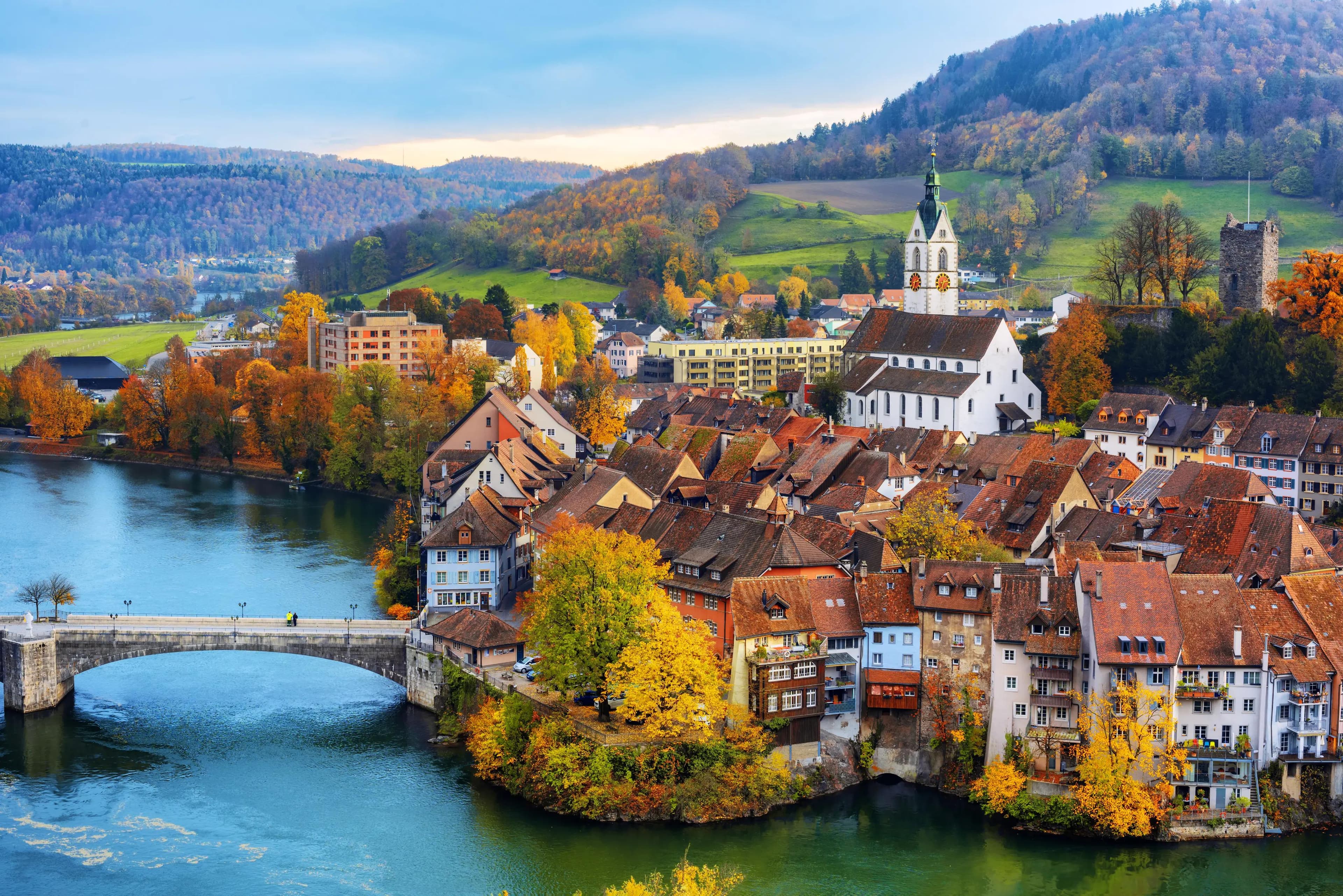
Many foreign families relocate to Switzerland for work.


FAQ

A "good" salary depends on your household size and location. For a single professional, a gross annual income of CHF 90,000 to CHF 100,000 provides a high quality of life. For a family of four, a combined household income of CHF 130,000 to CHF 150,000 is typically required to live comfortably in cities like Geneva or Zurich while maintaining savings.

Conclusion

Understanding Switzerland’s average income is only the starting point. A successful relocation depends on how that income aligns with your specific lifestyle, especially in a unique market like Geneva.
Working with local experts helps you:
  • Identify the best neighborhoods for your budget.
  • Calculate true net income based on current 2026 tax laws.
  • Navigate the competitive school and housing landscape.
Contact us to get more information about Geneva and the relocation process to the city. Our expert team will provide you with 1-on-1 consultations to make careful preparation for your move.